What Is a Vintage Camera, Really?
The DayRoll TeamYou can spot the vibe before you know the specs. Metal body. Chunky dials. Maybe a little wear on the corners. Photos that feel softer, moodier, less perfect in the best way. If you’ve ever asked what is a vintage camera, the short answer is simple: it’s an older camera from a past era, usually valued for its age, design, and the distinct way it captures images.
But that answer only gets you halfway there. “Vintage camera” is one of those phrases people use to mean a few different things at once. Sometimes they mean a true old film camera. Sometimes they mean a collectible model with history. And sometimes they really mean the look - nostalgic, textured, warm, and a little imperfect.
What is a vintage camera?
At its core, a vintage camera is a camera made decades ago, usually from the film era, that reflects the design and technology of its time. There’s no single official cutoff, but most people use “vintage” for cameras that are at least 20 to 30 years old. Think 35mm point-and-shoots, old Polaroids, rangefinders, SLRs, and medium format cameras from the mid-to-late 20th century.
Age matters, but it’s not the only thing. A camera can be old without feeling vintage in the way people usually mean it. When people call a camera vintage, they’re often talking about a mix of history, character, and visual identity. It’s the kind of object that feels tied to a certain era - not just because it survived, but because it still looks and shoots like that era.
That’s why some old cameras end up as collector pieces, while others stay cheap at thrift stores. The label is partly technical and partly cultural.
What makes a camera feel vintage?
The easiest answer is time. The more useful answer is personality.
Vintage cameras tend to have a different physical presence than modern cameras or phones. They often use mechanical controls, visible knobs, optical viewfinders, and a build that feels heavier and more intentional. You press a real shutter button. You wind film. You wait to see what you got. The process slows everything down.
That slower rhythm is part of the appeal. A vintage camera doesn’t just capture a moment. It changes how you move through one. You take fewer shots. You choose better moments. You stop machine-gunning 40 versions of the same sunset.
Then there’s the image itself. Vintage cameras are loved because their photos usually don’t look clinically clean. Depending on the camera and film, you might get grain, softened focus, colour shifts, light leaks, flash falloff, or slightly weird framing. On paper, those are flaws. In real life, they’re why the photos feel alive.
Vintage camera vs retro camera
This is where people get tripped up.
A vintage camera is actually old. A retro camera is new but styled to feel old. That’s the big difference.
If you buy a camera from the 1980s at a flea market, that’s vintage. If you buy a newer camera with a nostalgic design or film-inspired image style, that’s retro. Both can give you a similar mood, but the experience is not the same.
A true vintage camera gives you the original hardware, quirks, and sometimes the headaches too. Film costs money. Repairs can be tricky. Batteries might be weird or discontinued. Exposure can be inconsistent. That unpredictability is charming until you lose a whole roll from a beach trip.
A retro-style camera takes the emotional part people want - the look, the nostalgia, the separation from phone photography - and cuts some of the friction. That’s why so many people who love the vintage aesthetic don’t actually want a full vintage workflow. They want photos that feel less polished, not a new side quest involving expired film and repair forums.
Why people still care about vintage cameras
Because perfect got boring.
Phone cameras are impressive, but they’ve also made everything look the same. Clean skin, sharp detail, boosted dynamic range, auto-corrected colour. Great for convenience. Not always great for mood.
Vintage cameras offer the opposite. They make room for surprise. They let a photo be messy, dark, grainy, blown out, or weirdly beautiful. For a generation raised on constant content, that unpredictability feels fresh.
There’s also the social part. Pulling out a vintage camera changes the energy of a moment. At a party, on a road trip, at dinner, at the beach - it signals that something worth remembering is happening. People pose differently. They loosen up. The camera itself becomes part of the memory.
That matters more than people admit. A camera isn’t just a tool. It’s a vibe-setter.
The main types of vintage cameras
Not every vintage camera does the same thing, and not every type fits the same lifestyle.
Vintage point-and-shoots are the easiest entry point. They’re compact, casual, and made for everyday snapshots. This is the category most people picture when they want that effortless party-photo energy.
SLRs are more hands-on. You can swap lenses and control settings more precisely, but they ask more from you. If you love the craft of photography, that can be part of the fun. If you just want cute photos on a night out, it might be too much.
Rangefinders have a cult following because of their design and feel. They can produce beautiful images, but they’re usually less beginner-friendly.
Instant cameras deserve their own lane. Old Polaroids are technically vintage too, and they carry a very specific magic. The print-in-your-hand moment still hits. The trade-off is cost and inconsistency.
Medium format cameras are the dreamier, more serious option. Gorgeous results. Bigger negatives. More effort. Usually not something you toss in a small bag before heading to brunch.
Is every old camera worth buying?
No. And this is where the romantic idea of vintage can clash with reality.
Some old cameras are amazing. Some are overpriced because they’re trendy. Some just don’t work well anymore. Light seals fail. Meters die. Lenses haze. Battery compartments corrode. A camera can look cool on your shelf and still be useless when you actually need it.
There’s also a difference between wanting a vintage camera and wanting vintage-looking photos. A lot of people think they want the first thing when they really want the second.
That distinction matters because it saves you money and frustration. If you love hunting for old gear, testing film stocks, and accepting that half the fun is the unpredictability, a real vintage camera might be perfect. If you mostly want a pocket camera that gives you nostalgic shots without editing, you may be happier with something designed for modern life.
Why the vintage look matters more than ever
Right now, people are craving images that feel personal again. Not over-lit. Not over-smoothed. Not built for approval before they’re even taken.
That’s a big reason vintage camera culture keeps showing up in fashion, travel, nightlife, and creator spaces. The appeal isn’t just the hardware. It’s what the photos say. They feel spontaneous. Collected, not manufactured. Like a memory instead of a performance.
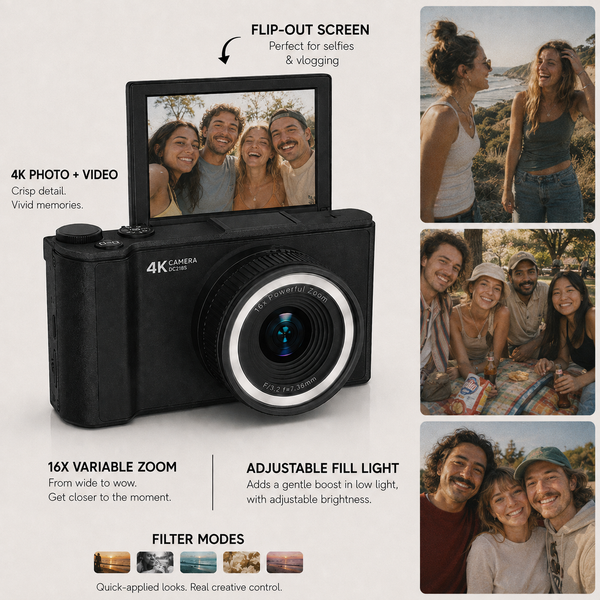
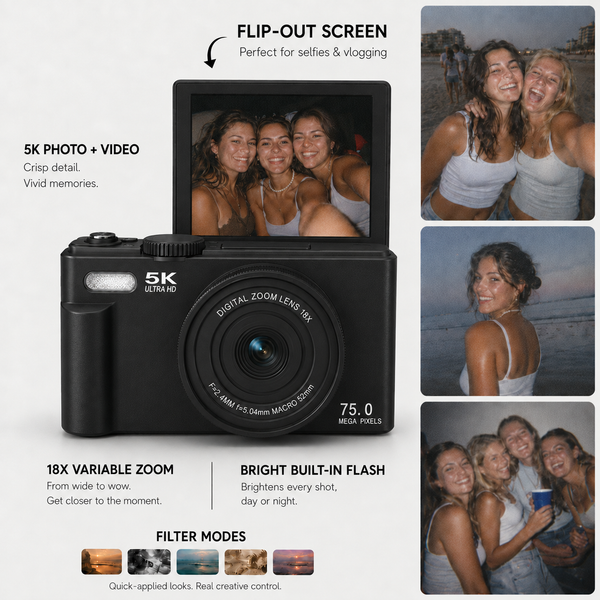
And that’s also why retro-inspired digital cameras have found such a strong audience. They tap into the same desire without asking people to become hobbyists. No lab run. No editing marathon. No fighting your phone’s camera roll for attention. Just shoot.
For a lot of people, that’s the sweet spot. The feeling of vintage, minus the maintenance schedule.
In our customers’ words
“Great pics and product”
Belinda Z., review of the Q5 DigiCam
So what is a vintage camera really?
It’s an old camera, yes. But more than that, it’s a different relationship to taking photos.
It’s slower. Less polished. More selective. It turns pictures back into moments instead of infinite drafts. That’s why people keep coming back to it, even with phone cameras getting smarter every year.
If you’re drawn to vintage cameras, pay attention to what you actually love. Is it the object itself, with all its history and quirks? Is it the ritual of film? Or is it the kind of image you get - warm, imperfect, and instantly better than another sterile phone shot?
There’s no wrong answer. A real vintage camera can be magic. So can a modern camera that captures the same mood without the extra work. Even brands like DayRoll exist because not everyone wants the hassle - they just want the feeling.
That’s the useful way to think about it. Don’t chase vintage because it sounds cool. Chase the kind of memory you want to make, and pick the camera that lets you actually keep doing it.