Is There a Digital Camera That Looks Like Film?
The DayRoll TeamYou can spot the difference in about half a second. One photo feels flat, too sharp, too clean. The other has warmth, grain, a little softness, and that accidental magic people still chase on Pinterest, TikTok, and camera dumps. So, is there a digital camera that looks like film? Yes. But the better question is what kind of film look you actually want.
Some people want a true vintage body with dials and silver trim. Others want digital photos that feel like they came from a disposable, a point-and-shoot from 2004, or a roll of film pulled from a beach trip and developed a week later. Those are not the same thing. And if you buy based on specs alone, you can end up with a camera that looks retro in your hand but still produces images that feel way too digital.
Is there a digital camera that looks like film - really?
Yes, but there are two different versions of this answer.
The first is a digital camera that looks like a film camera on the outside. Think retro design, compact body, maybe a flash, maybe a silver-and-black finish. It gives old-school energy, but that doesn't automatically mean the photos will look like film.
The second is a digital camera that makes photos look like film. That means warm tones, less clinical sharpness, visible texture, a slightly imperfect vibe, and colours that feel lived-in instead of hyper-processed. For most people asking this question, this is what they actually mean.
The catch is simple. Plenty of cameras sell the retro look. Fewer deliver the film-inspired feel straight out of the camera.
What makes a digital photo feel like film?
It usually comes down to mood, not perfection. Film has character because it doesn't try to flatten every moment into clean, ultra-HD sameness. Skin looks softer. Flash feels more dramatic. Highlights bloom a little. Shadows hold mystery instead of turning everything into bright, evenly lit content.
That is why phone photos can feel disappointing, even when they are technically better. Phones are built to optimise everything. More detail, more correction, more computational processing. Great if you want crisp holiday shots. Not great if you want a photo that feels like a memory instead of a file.
A film-style digital camera usually gets closer by doing the opposite. It leans into warmth, grain, texture, direct flash, and a more candid overall look. Sometimes the image quality is intentionally less polished, and that is part of the appeal. If your feed already has enough perfect photos, a little chaos can be the whole point.
The three camera types people confuse
When people search for a digital camera that looks like film, they are usually mixing together three categories.
The first is the retro-designed digital camera. It looks cool, feels nostalgic, and can absolutely be part of your style. But some of these still produce very clean, modern images unless you edit them later.
The second is the advanced mirrorless or compact camera with film simulations. These can create beautiful film-inspired colours, but they are often more expensive and more involved than casual users expect. If you want to tweak settings, learn profiles, and think about your workflow, they can be great. If you want grab-and-go, maybe not.
The third is the simple lifestyle digital camera built for instant aesthetic payoff. This is the one that makes the most sense for people who want the vibe without the homework. Small enough to bring everywhere. Easy enough to hand to a friend. Photos that already feel nostalgic without spending twenty minutes editing them afterward.
That last category is where a lot of people find what they were actually looking for all along.
Why the phone in your pocket still is not the same
Yes, you can add a film filter to an iPhone photo. Everybody knows that. The problem is that most filtered phone photos still look like phone photos wearing a costume.
The starting point matters. When a smartphone captures a scene, it is already processing for sharpness, dynamic range, skin smoothing, and detail recovery. By the time you throw on grain and faded tones, the image can still feel too clean underneath it all.
A dedicated camera changes the behaviour around the photo too. You shoot differently when you are not opening the same device you use for texts, work, maps, and doomscrolling. You pay more attention. Your friends react differently. The moment feels more intentional and less like content production.
That is part of why dedicated retro digital cameras hit differently. The photo is not just edited to look nostalgic. The whole experience creates better raw material for that nostalgic feel.
What to look for if you want film vibes without the hassle
If your goal is simple, the shopping process should be too. Look less at pro-level specs and more at what the camera actually gives you in real life.
First, pay attention to the straight-out-of-camera look. If a camera needs heavy editing to feel film-inspired, it probably is not the right fit for someone who wants easy results. The best option for this kind of buyer is one that already gives warmth, grain, and flash-heavy charm without extra steps.
Second, size matters. If it is not pocketable, you will leave it at home. And a camera left at home never becomes your go-to for beach days, parties, road trips, or late-night photo dumps.
Third, think about energy, not specs. Do you want polished travel photography, or do you want fun photos that make people ask what camera you used? Those are different purchases.
Finally, be honest about your patience. Some cameras are amazing if you love settings, menus, and learning curves. Others are better if your dream setup is basically this: turn it on, hit flash, shoot, post.
Is there a digital camera that looks like film and feels easy to use?
That is really the sweet spot. Not just film-inspired photos, but film-inspired photos without friction.
A lot of people do not want to become camera experts. They want a camera for real life. Something that slips into a bag, comes out fast, and makes ordinary nights look a little more iconic. Birthday dinners. Windows-down road trips. Random servo stops. Messy mirror pics before going out.
That is why compact retro cameras are having a moment. They make people feel less like creators chasing perfection and more like people actually living their lives. No app. No editing spiral. Just shoot.
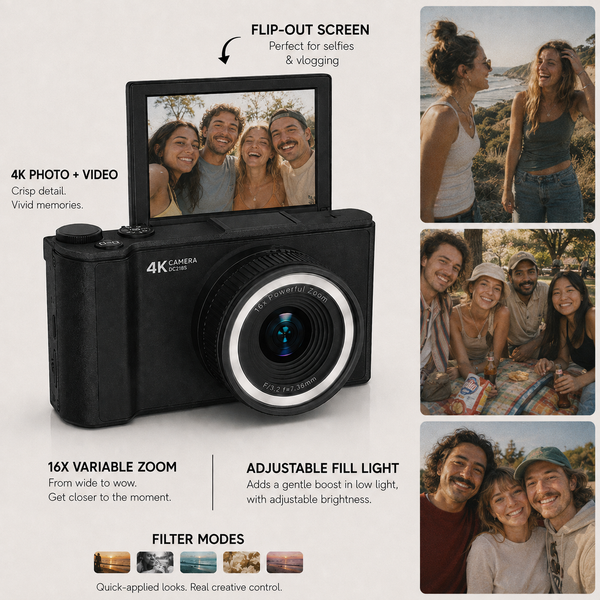
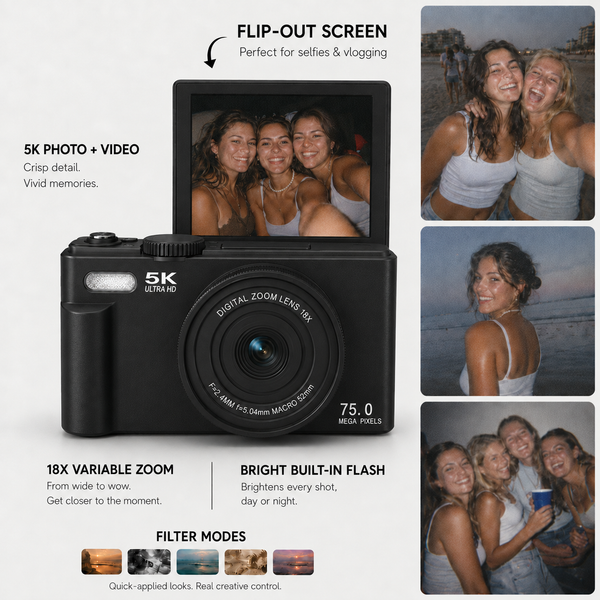
For this audience, a camera like DayRoll makes sense because it is built around the result, not the complexity. The whole appeal is that you get that warm, nostalgic look without turning every photo into a project.
The trade-off nobody tells you about
If you want a digital camera that really looks like film, you may have to stop chasing perfect image quality.
That sounds backwards until you think about what makes film lovable in the first place. It is not maximum sharpness. It is mood. Imperfection. Texture. The feeling that the moment happened fast and honestly.
So yes, there is a trade-off. A film-style digital camera may give you less technical perfection than a flagship phone or a high-end mirrorless setup. But if your goal is personality, that trade can be worth it.
This is where buyers get tripped up. They compare cameras based on resolution charts when they should be asking a different question: which one makes my photos feel the way I want them to feel?
If the answer is warmth, grain, flash, nostalgia, and less overproduced energy, then a simpler retro digital camera can beat a more expensive option for your actual lifestyle.
In our customers’ words
“Love this little camera. I keep it in my bag and actually take photos now instead of using my phone for everything.”
Emily C., review of the Q6 Max
Who this kind of camera is perfect for
If your camera roll is full of screenshots, blurry night photos, and moments you wish looked cooler than they do on your phone, you are probably the target audience.
This kind of camera fits people who care about style but do not want the barrier of traditional photography. It fits travellers who want a second device for memory-making, not professional documentation. It fits friend groups that love taking turns with the flash on. It fits anyone tired of editing every photo just to make it feel less sterile.
It may not be right for someone who wants interchangeable lenses, total manual control, or gallery-grade files. But that is okay. Not every camera needs to be everything.
Sometimes the best camera is the one that makes you actually want to bring it out.
If you have been asking, is there a digital camera that looks like film, the answer is yes - and the best ones do more than mimic the look. They make your photos feel more alive, more personal, and a lot less like everyone else's. Pick the one that makes you want to capture the night before it is gone.