Different Camera Styles, Explained Simply
The DayRoll TeamYour beach pics and your night-out pics should not look like they were taken in the same sterile phone camera app. That is exactly why different camera styles matter. The camera you use shapes the mood before you ever post, print, or send the photo to the group chat.
Some cameras make everything feel crisp and polished. Others make a random Tuesday look like a memory you found in a shoebox. Neither is automatically better. It depends on what you want your photos to say about the moment and, honestly, about you.
Why different camera styles change the whole vibe
Most people think about cameras like they are shopping for features. Better lens. More zoom. Higher resolution. But for real life, that is rarely the first question. The first question is usually simpler: what do you want the photo to feel like?
A clean mirrorless shot feels intentional. A disposable-style image feels spontaneous. A retro digital look feels warm, a little messy, and way more alive than the average phone pic. That is why two cameras can photograph the same sunset and give you two totally different moods.
This is also why phone photos often start blending together. They are optimised to be sharp, bright, and corrected. Great for convenience. Not always great for personality. If your camera smooths every moment into the same look, your memories start feeling weirdly interchangeable.
The most common different camera styles
Smartphone cameras
Phones win on convenience. They are always in your hand, they process everything instantly, and they make it easy to shoot a lot without thinking. If you want quick, clean, bright images, a phone does the job.
The trade-off is sameness. Phone cameras are built to flatten mistakes, boost detail, and make images broadly pleasing. That can be useful, but it can also make your photos feel a little too perfect and a little too familiar. If your feed is starting to look like everyone else’s, this is usually why.
DSLR and mirrorless cameras
These are for people who want control. More lens options. More manual settings. More room to shape the shot exactly how they want it. If you are shooting portraits, travel content, or anything more planned, this style has range.
But there is friction. Bigger body. More decisions. More setup. More editing if you want the final image to really hit. For some people, that process is part of the fun. For others, it is exactly what gets in the way of actually taking the camera out.
Film cameras
Film has a reputation for a reason. The colours can feel richer. The imperfections can make a moment feel more honest. Grain, flash, blur, and light leaks can turn a regular scene into something with actual emotional texture.
The downside is obvious. Film costs money. Developing takes time. You cannot instantly check what you got. That delay can be romantic, but it is not always practical for casual everyday use.
Instant cameras
Instant cameras are less about technical perfection and more about the experience. You take the shot, it prints, and suddenly the moment exists in your hand. They are fun at parties, birthdays, road trips, and low-stakes hangs where the photo itself becomes part of the memory.
What you give up is consistency. Image quality is not always reliable, and the cost per shot adds up fast. Great for novelty. Less ideal if you want a pocket camera you can carry everywhere and use often.
Retro digital cameras
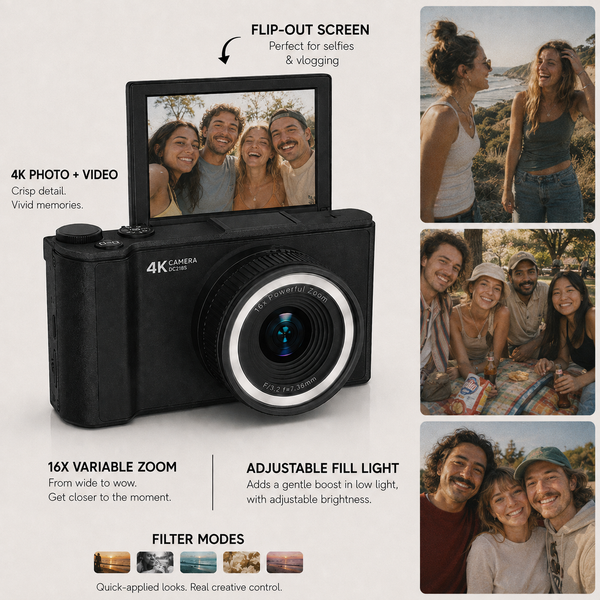
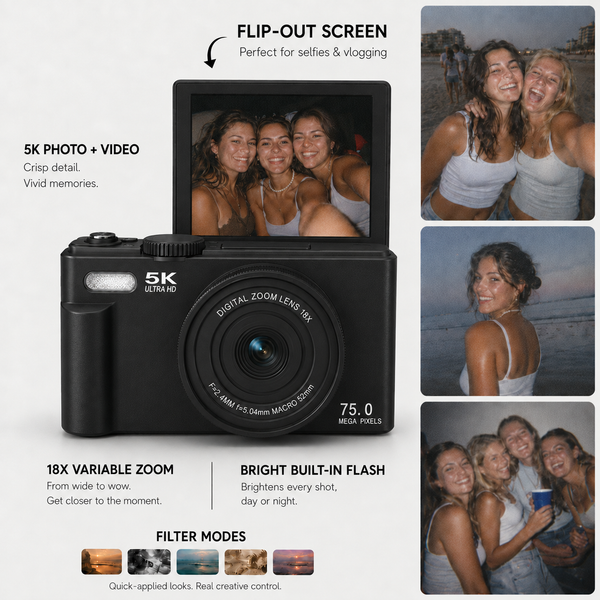
This is where things get interesting. Retro digital cameras sit in the sweet spot between film energy and modern ease. You get the charm people love - warmer tones, grain, flash-heavy nightlife shots, that early-digital feel - without adding editing apps or a complicated workflow.
For a lot of people, this is the camera style that makes the most sense right now. It gives you a look straight out of the camera, fits in your bag or pocket, and makes nights out, holidays, and random friend pics feel more distinct than another polished phone shot. No app. No editing. Just shoot.
How to pick between different camera styles
The wrong way to choose a camera is to ask which one is best overall. There is no best overall. There is only best for your life.
If you care about convenience above everything, your phone is still useful. If you love learning gear and editing, mirrorless or DSLR might be worth it. If you want the ritual and surprise of analog, film has its place. But if what you actually want is a camera that makes ordinary moments look better without making your life harder, retro digital is hard to ignore.
Think about where you will use it. Beach days need something easy to throw in a tote. Nights out need something fun, fast, and flash-friendly. Travel needs something light enough to keep with you all day. A camera can be technically amazing and still be the wrong fit if it is too annoying to bring.
Then think about the final image. Do you want perfect skin tones and sharp details, or do you want photos that feel lived in? Do you want content that looks optimised, or memories that look like actual memories? That answer matters more than spec sheets.
Different camera styles for different moments
A rooftop dinner, a thrifted outfit mirror pic, a last-minute road trip, and a friend blowing out birthday candles do not all need the same visual language. That is why camera style is really a lifestyle choice as much as a photo choice.
For casual social moments, polished can feel off. A hyper-detailed image of a late-night diner run is not always more appealing than one with flash, grain, and a little chaos. Sometimes the imperfect version feels closer to what the night was actually like.
That is also why dedicated pocket cameras have come back in such a big way. People are tired of documenting fun in the same device they use for work emails, alarm clocks, and screen time reports. A separate camera creates a different energy. It makes the moment feel a little less performative and a little more real.
What your camera style says about you
This might sound dramatic, but people do read aesthetic choices fast. Clean digital says curated. Film says sentimental. Instant says playful. Retro digital says you care about the look, but you are not trying too hard.
That last one is a big reason this style connects right now. It feels current without feeling overly polished. It gives you that nostalgic payoff people love, but it still fits how people actually live - fast, social, mobile, and very online.
You do not need to become a camera person to want better-looking memories. You just need a style that matches how you move. If your best moments happen on the go, your camera should keep up without turning into a project.
In our customers’ words
“Easy, fast, convenient”
Rachel F., DayRoll store review
The real trade-off: convenience vs character
Most camera decisions come down to one tension. Do you want maximum ease, or do you want more character in the final image?
Phones lean hard toward ease. Pro cameras lean toward control. Film leans toward emotion. Retro digital sits in a very appealing middle. It is easy enough to use constantly, but distinctive enough that your photos do not disappear into the endless stream of standard phone content.
That balance matters. A camera only changes your life if you actually use it. The best camera style is not the one with the most prestige. It is the one that comes with you, fits your habits, and gives you images you are excited to keep.
For a lot of people, that means choosing something smaller, simpler, and more aesthetic. Something that turns ordinary hangs into photos worth posting and even better ones to look back on later. DayRoll built its place around exactly that feeling.
If you are choosing between different camera styles, trust the one that makes you want to take more photos in the first place. The best shots usually happen when the camera feels like part of the moment, not a barrier to it.