Are Old Digital Cameras Any Good?
The DayRoll TeamYou can spot an old digital camera photo in half a second. The flash hits harder. The colours feel a little less polished. The whole image looks more like a memory than a content plan. So if you’re asking are old digital cameras any good, the real answer is yes - but only if you want the specific kind of imperfect charm they’re known for.
That’s the part people miss. Old digital cameras are not secretly better than modern cameras in every way. They’re better at a vibe. They can make a party photo feel like a party photo. They can make a beach sunset feel more lived-in and less processed. If your goal is clean, ultra-sharp, technically perfect images, your phone probably wins. If your goal is character, nostalgia, and photos that don’t look like everyone else’s, old digital cameras still have a lot going for them.
Are old digital cameras any good for everyday use?
They can be, but it depends on what “good” means to you.
If good means easy to carry, fun to use, and capable of giving you that early-2000s look without editing for 20 minutes, then yes. A lot of older point-and-shoot cameras still deliver exactly that. They’re compact, straightforward, and often come with built-in flash that gives night shots a raw, social, out-all-night feel your phone usually smooths out.
If good means fast autofocus, all-day battery life, instant sharing, and reliable low-light performance, then the answer gets messier. Old digital cameras can be slow. Menus can be clunky. Screens can look rough. Some models struggle indoors unless you use flash. And because they’re older, the condition matters almost as much as the original specs.
That’s why the old digital camera comeback is less about performance and more about personality. People aren’t picking them up because they beat the newest tech on paper. They’re picking them up because the photos feel different.
Why old digital cameras still look so good online
The biggest reason is simple. Their flaws are the point.
Modern phones are built to correct everything. They sharpen faces, lift shadows, smooth noise, and balance colours before you even hit save. That can look great, but it also creates a sameness. Every dinner photo starts to look like every other dinner photo. Every flash shot gets cleaned up until it loses the energy of the moment.
Old digital cameras do less correcting. That gives you harsher flash, softer edges, deeper contrast, and colours that can feel warmer or weirder in a good way. On a feed full of polished phone images, that kind of texture stands out fast.
There’s also the mindset shift. When you bring a separate camera, you shoot differently. You’re not opening the same device you use for texts, maps, and work notifications. You’re just taking photos. That alone makes the experience feel more present, which usually leads to better moments and more natural shots.
What old digital cameras do better than your phone
They’re better at creating distance from the endless phone workflow. That matters more than people admit.
With a phone, the photo is immediately part of the whole machine - retakes, edits, filters, posting, deleting, comparing. An old digital camera interrupts that loop. You shoot, keep moving, and look later. The result feels less staged.
They also tend to have a more distinct flash look. That’s a big one. If you love party photos, night-out pics, mirror shots, road trip snapshots, or that messy-fun aesthetic, older digital cameras often nail it without trying too hard. You don’t need to fake grain or add a disposable-camera filter after the fact.
And then there’s the aesthetic payoff. No app. No editing. Just shoot. That’s a huge reason retro-style cameras and older point-and-shoots keep coming back around.
Where old digital cameras fall short
This is where the hype needs a reality check.
A lot of genuinely old cameras are inconvenient. They may use outdated memory cards, proprietary charging cables, or batteries that barely hold a charge. Some are painfully slow between shots. Some produce great flash photos but look flat in daylight. Some are only fun because they’re cheap and unpredictable, not because they’re objectively reliable.
There’s also the risk factor. Buying a camera from 2006 can be hit or miss. The sensor might be fine, but the battery door might be loose. The zoom motor might fail. The LCD might be scratched to death. And if something breaks, replacement parts are not always easy to find.
So yes, old digital cameras can be good. But “old” doesn’t automatically mean “worth it.” Sometimes it means charming. Sometimes it means annoying.
Are old digital cameras any good for Instagram and TikTok?
Absolutely - if your goal is mood over perfection.
That lo-fi, flash-heavy, candid look works because it feels less managed. Photos from old digital cameras can make a night out look like an actual night out instead of a brand shoot. They give weekends, house parties, travel days, and random friend pics a little more edge and a little less polish.
For social content, that matters. People are tired of everything looking overly optimised. They want images with some life in them. Slight blur, blown highlights, weird flash, grainy shadows - those details can make a photo feel more real, not less valuable.
That said, not every old camera gives you the good kind of bad. Some just look dull or muddy. The sweet spot is a camera that feels intentionally nostalgic, not accidentally unusable.
The difference between truly old cameras and retro-style digital cameras
This is the part worth paying attention to.
A truly old digital camera gives you real nostalgia, but also real old-camera problems. You might get amazing flash photos and chaotic charm, but you may also get dead batteries, slow transfers, tiny screens, and random hardware issues.
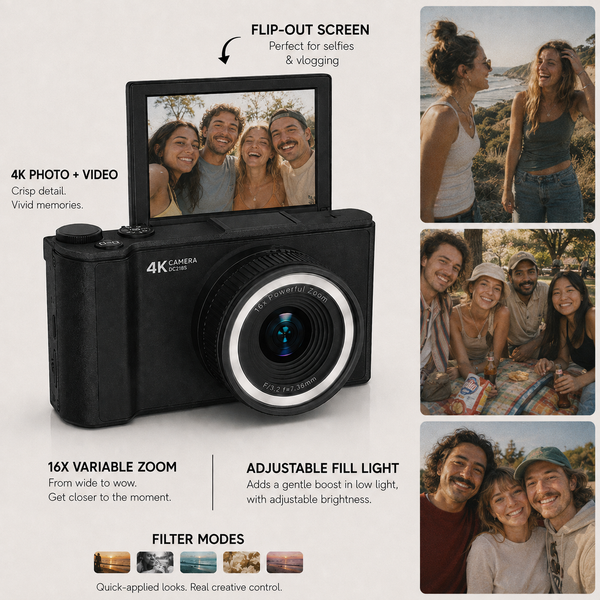
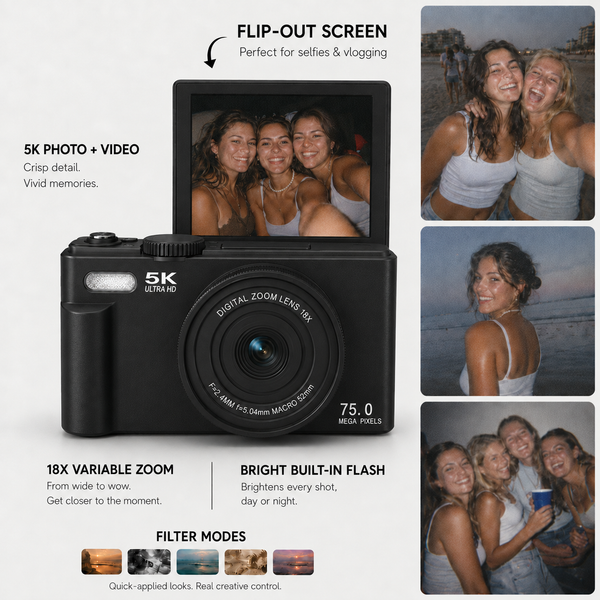
A retro-style digital camera aims for the same emotional result with fewer headaches. That’s why a lot of people now want the look of old digital photos without the friction of actually carrying around a fragile fifteen-year-old device.
That middle ground makes sense. You get the dedicated-camera energy, the throwback feel, and the out-of-camera aesthetic, but with a setup that fits your life now. For a lot of people, that’s the better buy. Not because it’s more “authentic,” but because you’ll actually use it.
That’s also why brands like DayRoll have a lane. The appeal isn’t technical nostalgia for its own sake. It’s getting that warm, grainy, instant-look photo style in a camera you’ll actually toss in your bag for a beach day, dinner, or a night out.
How to tell if an old digital camera is actually worth buying
Start with your reason. If you want a collectible, that’s one thing. If you want a camera for memories, parties, trips, and everyday carry, you should care less about rarity and more about how easy it is to live with.
Look at battery availability, storage compatibility, flash performance, and how the photos look straight out of camera. Sample photos matter more than spec sheets here. A camera can have modest megapixels and still produce images you love. Another can sound better on paper and give you nothing but flat, lifeless shots.
You should also be honest about your patience level. If hunting down cables and adapters sounds fun, a real old camera might be your thing. If that sounds like a hassle, go for something built to give you the same feeling with less maintenance.
The best camera in this category is usually the one you’ll bring everywhere. Small enough for your pocket. Easy enough to use without thinking. Distinct enough that the photos feel different right away.
In our customers’ words
“10/10 experience, shipping was fast.”
Kaiya J., DayRoll store review
So, are old digital cameras any good?
Yes - when you want photos with personality.
They’re good for nights you don’t want to over-document. Good for trips where you want the pictures to feel sun-soaked and slightly chaotic. Good for capturing your friends in a way that looks more lived-in than polished. They’re especially good if you’re bored of phone photos that look technically perfect and emotionally flat.
But they’re not magic. Some are too old, too unreliable, or too inconvenient to be worth the trouble. The better question isn’t whether old digital cameras are good in general. It’s whether you want the feeling they create badly enough to accept the trade-offs.
If you do, they still hit. And if you want that same throwback energy without the dead-battery drama, there’s nothing wrong with choosing a camera made for now that still gives your memories that unmistakable old-school glow.